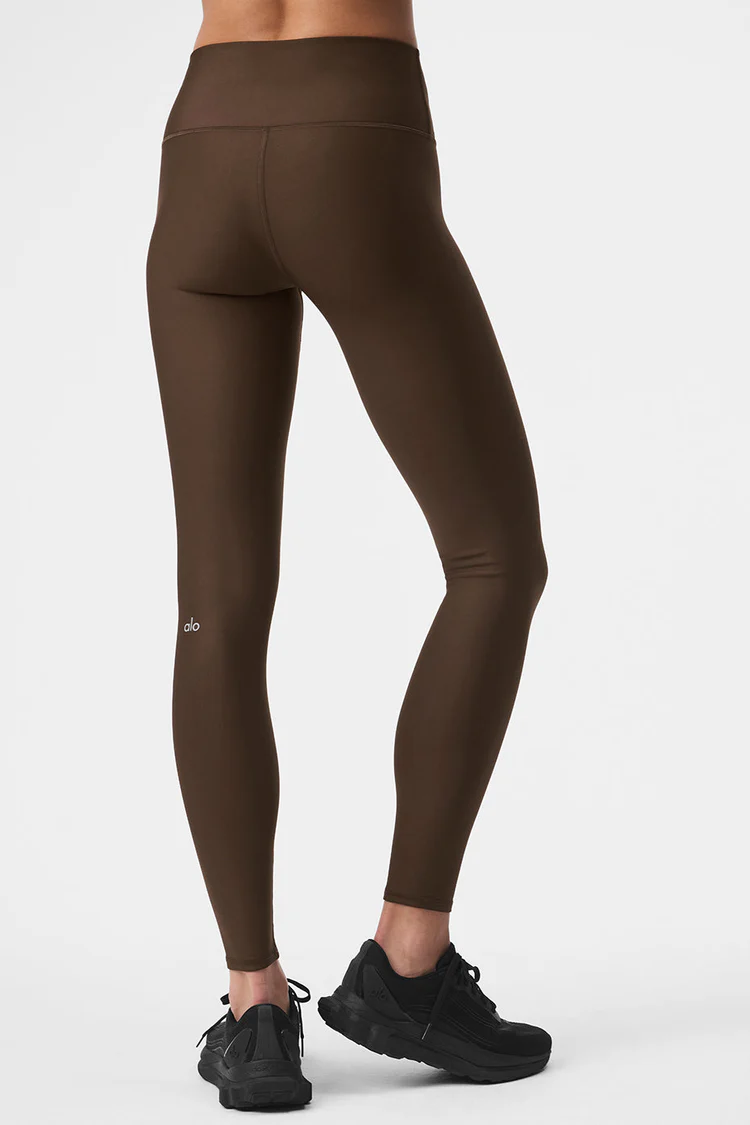
Body type guides are blunt instruments — your measurements matter more than a fruit label. But patterns do cluster: where leggings fail often follows proportion. This guide maps common body geometries to rise, waistband, and compression choices so you stop buying your third 'almost right' pair.
Pear-shaped (hips wider than shoulders)
Failure mode: thighs fit, waist gaps in down dog.
Fixes: curved waistband styles, mid-rise if high-rise gaps, avoid sizing up into baggy thighs.
Made-to-measure adjusts waist independently — How to Fix Waist Gap.
Apple-shaped (weight centered midsection)
Failure mode: waistband rolls or digs in twists.
Fixes: mid-rise (see High-Rise vs Mid-Rise), wider waistband, less compressive fabrics like Vuori DreamKnit.
Avoid aggressive hold-in marketing if comfort in flexion is the goal.
Athletic and hourglass
Athletic: muscular thighs and seat — compression can feel restrictive; look for proportional leg opening and nylon recovery.
Hourglass: often between sizes — S at waist, M at hip. Bracketing wastes time; scan-based sizing captures both.
Measure: How to Measure Your Body.
Frequently Asked Questions
Do body type guides replace measurements?
No — measure waist, high hip, full hip, rise, inseam. Types are shorthand for common issues.
Best brand for pear shapes?
Varies — Lululemon can gap; Vuori more relaxed waist. Custom waist curve is most reliable.
Can one legging fit all types?
Only if patterned to your body — ready-to-wear uses one block per size.
Related Reading

Why Clothing Sizes Don't Exist
A calm explainer on inconsistency and why fit feels random.

How to Measure Your Body (Most Guides Are Wrong)
Practical, non-fussy steps to get repeatable measurements at home.

Made-to-Measure vs Bespoke vs Custom
Clear differences, when each makes sense, and why cost varies.