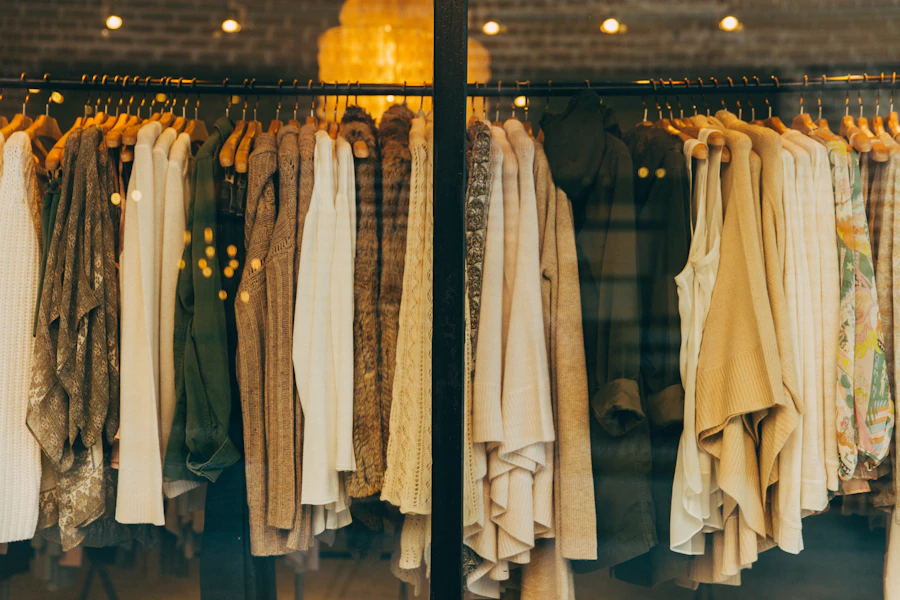
There is a city in central Vietnam where you can walk into a shop at 9am, be measured at 30 to 45 individual body points, and return the following evening to try on a garment made exactly to your body. This is Hoi An — and what happens there upends almost everything most of us believe about how clothes are supposed to be made.
A Trading Port That Absorbed the World's Best Ideas
From the 15th century onward, Hoi An was one of Southeast Asia's most important trading ports. Chinese merchants, Japanese traders, Portuguese and Dutch sailors, and French colonizers all passed through and left traces — in architecture, in cuisine, and in craft.
This cultural convergence created something unusual: a city with access to fine fabrics from across Asia and sustained demand for tailored garments from across Europe. The combination forced local craftspeople to become exceptionally technically skilled in a very short historical timeframe.
UNESCO granted Hoi An World Heritage status in 1999. The designation recognizes not just the preserved architecture of the Ancient Town, but the living craft traditions that have persisted through centuries of change. Today, Hoi An has an estimated 400+ tailoring shops — a concentration of custom garment-making unmatched anywhere on earth for a city its size.
How French Colonial Rule Shaped Vietnamese Tailoring
In the late 19th century, French colonial administrators arrived in Vietnam with a practical problem: they needed European-style formal garments made and maintained in tropical heat. Vietnamese tailors absorbed European cutting techniques — structured shoulders, precise seam allowances, the concept of a garment shaped specifically to a single body's architecture.
They fused these Western patterns with existing Asian craftsmanship: regional silk sourcing networks, fine hand finishing, and a deep cultural sensitivity to how fabric drapes and breathes in humidity. The result was a hybrid tailoring culture that was technically rigorous in a way that either tradition alone had not required.
Making heavy European silhouettes work comfortably in a tropical climate demands extraordinary precision. A jacket with wrong shoulder shaping becomes unwearable at 32°C. A trouser cut without accounting for heat expansion fits badly by noon. Vietnamese tailors became exceptionally skilled at the intersection of structure and comfort — a skill set that translates directly to form-fitting activewear.
The Craft Passes Down, Not Through Schools
Very few Hoi An tailors learned their craft in a classroom. Skills transfer through apprenticeship: a child watches a parent measure, cut, and stitch for years before being trusted with scissors. This produces tailors who understand the why behind every measurement — not just how wide a waist is, but how it relates to the hip, the torso length, the shoulder drop.
A tailor trained this way takes 30 to 45 individual measurements per client. They also record qualitative observations that no tape measure captures: does this client stand with their weight forward? Do their shoulders roll in? Is one hip higher than the other? These observations become pattern adjustments.
This apprenticeship model means knowledge is cumulative across generations. A third-generation tailor in Hoi An has effectively decades more accumulated pattern knowledge than their formal age would suggest — because they grew up immersed in it.
What 400 Years of Precision Actually Built
The most reputable Hoi An shops have served international clients for 20 to 30 years, with return visitors planning their flights specifically around fitting appointments. Standard turnaround is 3 to 5 days with two or three fitting sessions. Express 24-hour options exist; experienced tailors recommend against using them unless there is truly no alternative.
The quality marker that locals and seasoned travelers use: flip the finished garment inside out. If the interior seams are as clean and precise as the outside, the garment was built to last. If the inside looks rushed, the outside presentation is cosmetic.
For the tailor, each fitting is also a diagnostic. The first version of a garment reveals information about a client's body that even comprehensive measurements don't capture — how they hold their weight in movement, where fabric pulls when they sit or reach. The second and third fittings exist to incorporate what only wearing the garment reveals.
Why This Tradition Matters in an Age of Instant Fashion
Hoi An tailoring is the structural opposite of fast fashion. Nothing is mass-produced. Nothing is standardized. Nothing sits in a warehouse hoping someone the right size buys it before it's marked down and eventually destroyed.
Every garment starts with a specific human body and ends only when that body is satisfied with the fit. In a global fashion system where an estimated 30% of manufactured clothing is never sold, and where the average online shopper returns roughly one in three purchases because of fit problems, that model looks less like a historical curiosity and more like an obvious solution.
The tradition that emerged in Hoi An over four centuries — precision measurement, multi-fitting refinement, skills transmitted through family lines — is not nostalgia. It is the most technically sound approach to making clothes that has ever existed. Modern manufacturing abandoned it for economics. The question is whether technology can bring it back at scale. Learn more about how digital tailoring from video is making that possible.
Frequently Asked Questions
How long does tailoring take in Hoi An?
Standard turnaround is 3 to 5 days with two or three fitting appointments. Express 24 to 48 hour service is available but most experienced tailors recommend at least 4 days for best results. You need time between fittings for adjustments — rushing the process almost always compromises the fit.
Is Hoi An tailoring bespoke or made-to-measure?
Most Hoi An tailoring is made-to-measure rather than true bespoke. In bespoke tailoring, a unique pattern is created entirely from scratch for your body. Made-to-measure adjusts an existing block to your measurements. Hoi An excels at the latter — the results are dramatically better than standard sizing, even if the process differs from full bespoke. The distinction matters technically, but what you experience as a customer is a garment made for your specific body.
How much does custom tailoring cost in Hoi An?
Custom suits typically range from $90 to $250, with full-canvas premium construction reaching $300 to $400. Women's garments vary widely by style and fabric. Prices are substantially lower than equivalent Western tailoring — the value comes not from cheap materials but from lower labor cost in a city where tailoring is the primary industry.
What should I bring to a first fitting in Hoi An?
Bring reference photos of styles you like — tailors work from visual references better than verbal descriptions. Bring your best-fitting existing garment so the tailor can replicate what works about it. Wear the shoes and undergarments you'd actually wear with the finished piece, since these affect fit measurements. Morning appointments are recommended to avoid peak tourist hours.
Why do Vietnamese tailors take so many measurements?
Because 30 to 45 measurements capture the actual shape of a human body, whereas standard sizing uses 2 to 3. Measurements like rise, shoulder slope, front versus back torso length, and thigh circumference at multiple heights are essential for garments that fit in motion — not just when standing still. Traditional Vietnamese tailoring treats these as non-negotiable minimums.