
Nylon and polyester dominate premium activewear — but they're not interchangeable. The fiber you wear affects how leggings feel on day one, how they fit on day one hundred, and how they handle sweat in a 90-minute class. This comparison cuts through brand marketing so you can read any label intelligently.
Fiber Properties
Nylon: Higher melting point, stronger, more elastic recovery. Preferred for performance tights where shape retention matters.
Polyester: Easier to dye, common in recycled (rPET) programs, softer when brushed. More prone to static and pilling under abrasion.
Both are synthetic and shed microfibers when washed — wash full loads, cold, with a filter if possible.
Brand Alignment
Nylon-forward: Lululemon (Nulu, Luxtreme, Luon).
Polyester-forward: Alo (Airlift, Airbrush), Vuori (DreamKnit).
Neither is universally 'better' — match fiber to use case. See Yoga Pants Fabric Guide.
Care Differences
Both: cold wash, no fabric softener (coats fibers, reduces wicking), low heat or air dry.
Polyester may show oil stains more visibly; pre-treat knees and waistbands.
Nylon can melt under high dryer heat — spandex recovery degrades above ~30°C.
Frequently Asked Questions
Is nylon or polyester better for hot yoga?
Nylon typically wicks faster and feels less sticky when saturated. Lightweight nylon blends (e.g., Everlux-type constructions) are common in hot studios.
Is recycled polyester as durable as nylon?
Recycled polyester performs similarly to virgin polyester — recycling doesn't change fundamental fiber behavior. Nylon generally still wins on abrasion and recovery.
Related Reading

Sustainable Materials Guide: What Actually Matters for Clothes That Last
Organic cotton, recycled polyester, Tencel, hemp — and why material choice is only half the story.

Yoga Pants Fabric Guide: Nylon, Spandex, and What Actually Matters
Fiber content, stretch recovery, opacity, and sweat performance — decoded for shoppers.
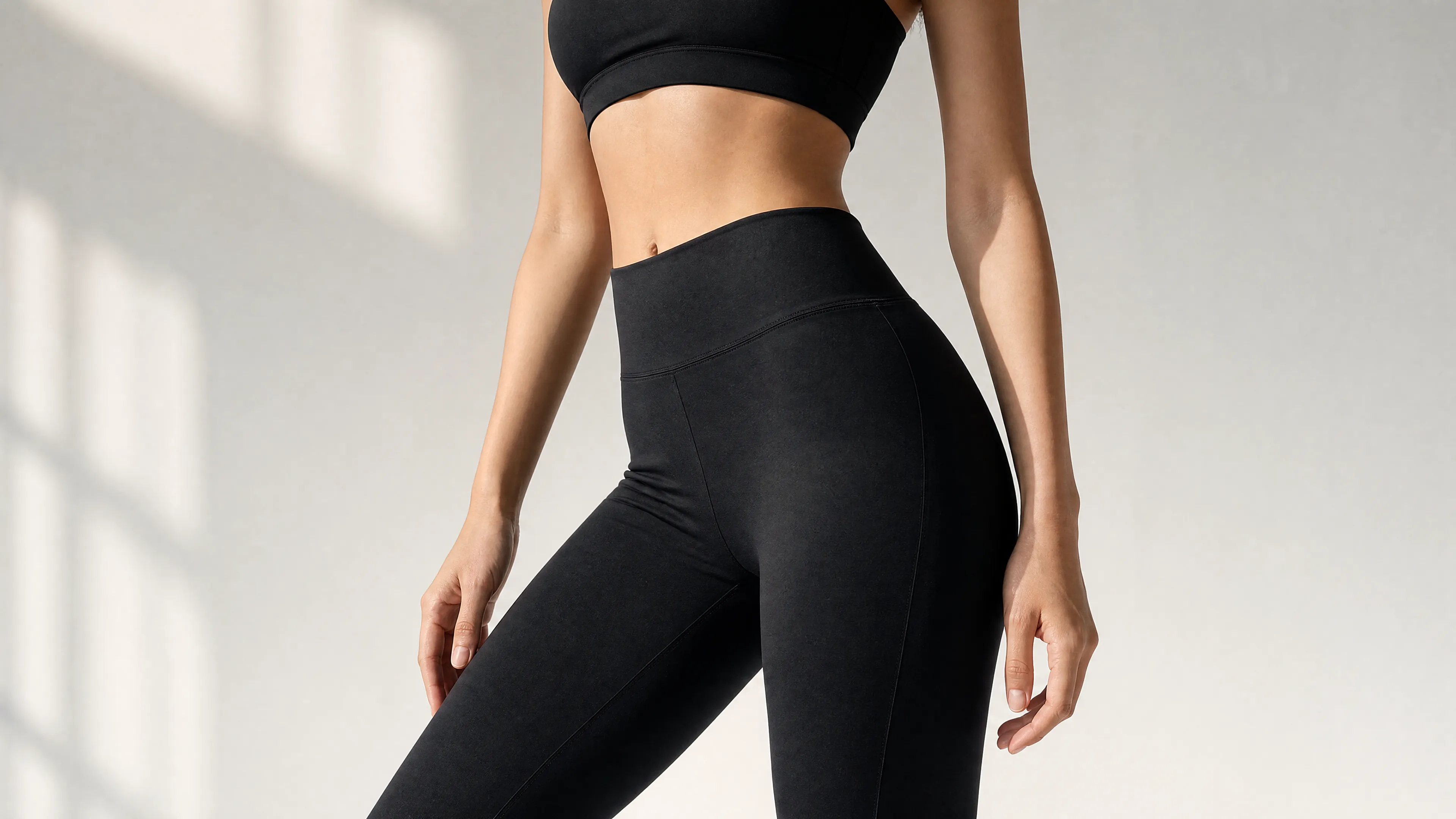
What Makes Leggings Squat-Proof? Fabric, Weight, and Construction
Opacity in deep bends depends on knit density and color — here's how to test and what to buy.