
Every premium yoga brand has a proprietary fabric name — Nulu, DreamKnit, Airlift. Underneath the branding are the same building blocks: nylon or polyester, plus spandex, knitted into a specific weight and structure. Understanding those basics helps you compare leggings across brands without relying on marketing copy. This guide explains what each fiber does, how blends affect fit and performance, and what to check before you buy.
The Core Fibers
Nylon (polyamide): Strong, elastic, moisture-wicking, excellent abrasion resistance. Holds shape after hundreds of wears. Used heavily by Lululemon and performance-focused brands. Downside: can feel cooler/ slicker than brushed polyester.
Polyester: Durable, colorfast, often recycled (rPET). Softer hand when brushed; may relax (bag out) faster than nylon under tension. Common in Alo, Vuori, and budget activewear.
Spandex / elastane / Lycra: The stretch engine. Typically 12–25% of premium blends. Provides recovery so waistbands snap back. Brand names (Lycra) are branded spandex — functionally similar.
Cotton blends: Breathable but absorb sweat, lose shape, and are rare in serious yoga tights. Avoid for hot or power yoga.
Knit Structure and Weight
GSM (grams per square meter) indicates fabric weight. Lightweight (~200–250 GSM) feels naked; mid-weight (~250–320 GSM) balances opacity and mobility; heavy (320+ GSM) adds compression and squat-proof confidence.
Double-knit or brushed interior adds warmth and comfort for restorative yoga; single-knit jersey is cooler for heated classes.
Seamless knitting reduces chafe but limits targeted compression zones. Cut-and-sew allows pattern shaping for glutes and waist — relevant for squat-proof construction.
Performance Factors That Matter in Class
Opacity: Test with a phone flashlight or deep squat before committing. Dark colors hide flaws; light colors expose thin knits.
Moisture management: Nylon and polyester both wick; nylon often dries with less cling. Cotton holds sweat.
Pilling: Friction from mats, bags, and washing causes fuzz balls. Nylon resists better; wash gentle, cold, inside-out.
Odor: Synthetic fibers harbor bacteria if not washed promptly. Some brands add anti-odor finishes — effectiveness varies.
How to Read a Label
Look for fiber percentages first — ignore trademark names until you know the base.
Prefer 4-way stretch for yoga (stretches warp and weft). 2-way only stretches one direction — fine for lounge, poor for deep poses.
Check care instructions: high heat destroys spandex recovery. Line dry when possible.
Cross-reference with our Sustainable Materials Guide if recycled content and certifications matter to you.
Frequently Asked Questions
What is the best fabric blend for yoga pants?
For most yoga practices, a nylon-spandex blend (roughly 75–85% nylon, 15–25% spandex) balances stretch, recovery, and durability. Polyester blends work for gentle practice and lifestyle wear at lower price points.
Is 100% cotton good for yoga?
No for active practice — cotton absorbs sweat, becomes heavy, and loses shape. Cotton-spandex blends are okay for restorative or very light movement only.
What does Lycra mean on a label?
Lycra is Invista's brand name for elastane/spandex. It indicates a premium stretch fiber with reliable recovery — functionally similar to generic elastane at similar percentages.
Why do some leggings feel softer but stretch out?
Brushed polyester feels soft initially but may have less recovery than nylon. Heavy use, hot washing, and fabric softener accelerate relaxation. Nylon-dominant blends typically hold shape longer.
Related Reading

Sustainable Materials Guide: What Actually Matters for Clothes That Last
Organic cotton, recycled polyester, Tencel, hemp — and why material choice is only half the story.
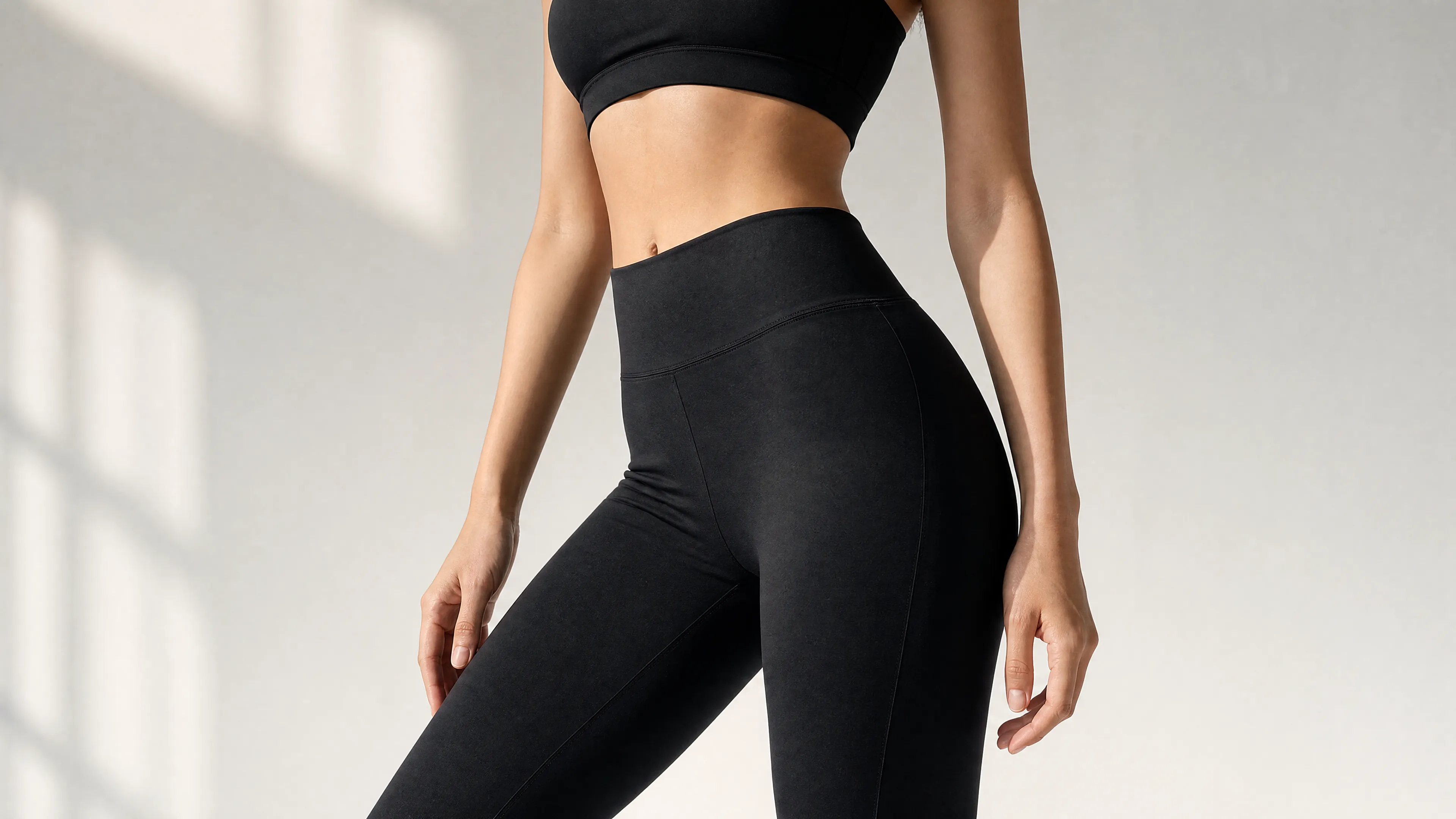
What Makes Leggings Squat-Proof? Fabric, Weight, and Construction
Opacity in deep bends depends on knit density and color — here's how to test and what to buy.

Nylon vs Polyester Activewear: Stretch, Sweat, and Durability
The most common premium activewear debate — settled with fiber facts.