
Sustainable materials get marketed as a simple swap: buy organic cotton instead of conventional cotton and you've done your part. The reality is messier. A garment's environmental footprint depends on how the fiber was grown or synthesized, how it was dyed and finished, how long you actually wear it, and whether it fits well enough to stay in your wardrobe instead of the returns pile. This guide cuts through the certifications and buzzwords to explain what matters when you're evaluating fabrics — especially for activewear, where synthetics dominate and marketing often outruns data.
Natural Fibers: Cotton, Linen, Hemp, and Wool
Organic cotton eliminates synthetic pesticides and often uses less water than conventional cotton, but it is not impact-free. Cotton is still a thirsty crop, and organic yields can be lower per acre, which sometimes means more land use for the same output. The benefit is real for soil health and farmworker exposure — but 'organic' on a label does not automatically mean low carbon if the garment was dyed with heavy chemicals overseas and shipped twice because the size was wrong.
Linen and hemp are among the lowest-impact natural fibers when grown responsibly. Both require relatively little water and pesticides, and hemp in particular grows quickly without much intervention. They breathe well and age gracefully — good properties for everyday and warm-weather pieces. For high-stretch activewear, they are rarely used alone because they lack the recovery of elastane blends; that is one reason yoga pants default to synthetics.
Wool and merino offer excellent durability and odor resistance, which extends garment life — often the biggest sustainability win. A merino base layer worn hundreds of times beats a cheap synthetic tee discarded after one season. The tradeoff is animal welfare and methane from grazing; look for Responsible Wool Standard (RWS) or similar traceability if wool is central to your wardrobe.
Synthetics and Recycled Polyester: The Activewear Default
Nylon and polyester dominate performance wear because they stretch, wick moisture, and survive thousands of squats. Both are petroleum-derived plastics. Virgin production is energy-intensive and does not biodegrade. At end of life, most synthetic garments cannot be effectively recycled into new textiles — mechanical recycling shortens fibers; chemical recycling exists at small scale but is not mainstream.
Recycled polyester (rPET), often from plastic bottles, reduces virgin petroleum use and is widely marketed as a sustainability solution. It helps upstream emissions but has a documented downside: recycled polyester can shed more microplastic fibers per wash than virgin polyester — roughly 55% more in some studies. For ocean pollution, rPET is not a clear win unless paired with washing practices (filters, less frequent washing) and long garment life.
Elastane (spandex, Lycra) is almost always present in yoga pants and tights. It cannot be recycled with mainstream textile streams and degrades heat-sensitive recycling. A 'sustainable' pant that is 80% recycled polyester and 20% elastane still has a complex end-of-life problem. Material choice for activewear is less about finding a perfect fiber and more about minimizing synthetic mass, maximizing durability, and avoiding disposable fit.
Semi-Synthetics and Next-Gen Fibers: Tencel, Modal, and Beyond
Tencel (lyocell) and modal are cellulosic fibers made from wood pulp, often eucalyptus or beech. Closed-loop lyocell production recycles solvents and can be lower-impact than conventional viscose, which uses harsher chemistry. They feel soft, drape well, and biodegrade faster than polyester — useful for lifestyle pieces and some athleisure blends.
Bio-based nylons and polyesters (made partly from corn or castor oil) reduce fossil inputs but are not automatically biodegradable. They are still plastics at end of life. Brands use them in marketing; life-cycle assessments vary by facility and energy grid.
Regenerative agriculture partnerships (cotton, wool) focus on soil carbon and biodiversity rather than only organic certification. These are promising for long-term impact but still rare at scale in mass-market activewear. When a brand cites 'regenerative' without third-party verification, treat it as a signal to dig deeper, not a finished answer.
Certifications Worth Knowing — and What They Miss
GOTS (Global Organic Textile Standard) covers organic fiber plus processing limits on dyes and chemicals. OEKO-TEX Standard 100 tests for harmful substances in finished fabric. Bluesign focuses on resource use and chemical management in mills. Fair Trade and SA8000 address labor — critical, but not the same as low carbon.
Certifications rarely account for fit-driven waste. A GOTS-certified tee that gets returned three times because the shoulders are wrong has a worse footprint than a conventional tee you wear for five years. As we cover in The Real Environmental Cost of Guessing Your Size, returns and short garment life often swamp fiber choice.
The practical hierarchy: (1) Will you wear it for years? (2) Does it fit without returns? (3) Is construction quality high enough to survive use? (4) Then optimize fiber and certification. Made-to-measure and body-aware sizing attack (1) and (2) directly — which is why Fast Fashion vs Made-to-Measure argues production model matters as much as material labels.
Frequently Asked Questions
What is the most sustainable fabric for yoga pants?
There is no perfect fabric for high-stretch activewear. Nylon and polyester dominate because of performance. The most sustainable approach is fewer, better-fitting pants worn longer — often via made-to-measure or durable construction — plus lower washing frequency to reduce microplastic shedding. If you choose synthetics, prioritize quality and fit over recycled marketing alone.
Is organic cotton better than recycled polyester?
They solve different problems. Organic cotton reduces pesticide and water toxicity in farming but is not ideal for high-performance stretch garments. Recycled polyester reduces virgin plastic use but still sheds microfibers and is hard to recycle at end of life. For activewear, neither is 'best' without context — garment lifespan and fit matter more.
What certifications should I look for?
GOTS for organic processing, OEKO-TEX for harmful substances, Bluesign for mill-level chemistry, and RWS for wool traceability are among the most useful. Also look for published emissions data and factory transparency — certifications alone do not prove a brand is sustainable overall.
Do sustainable materials prevent microplastic pollution?
Natural fibers like cotton, hemp, and wool do not shed plastic microfibers like polyester. Recycled polyester still sheds microplastics — sometimes more per wash than virgin. Reducing synthetic garment mass, washing less often, using filters, and keeping synthetics in use longer are the main mitigation strategies today.
Does material choice matter if clothes don't fit?
Fit often matters more than fiber. Ill-fitting clothes are returned, discarded sooner, and replaced faster — multiplying transport, packaging, and production impact. Starting with accurate measurements or made-to-order production reduces waste regardless of whether the fiber is organic or recycled.
Related Reading

Yoga Pants Fabric Guide: Nylon, Spandex, and What Actually Matters
Fiber content, stretch recovery, opacity, and sweat performance — decoded for shoppers.
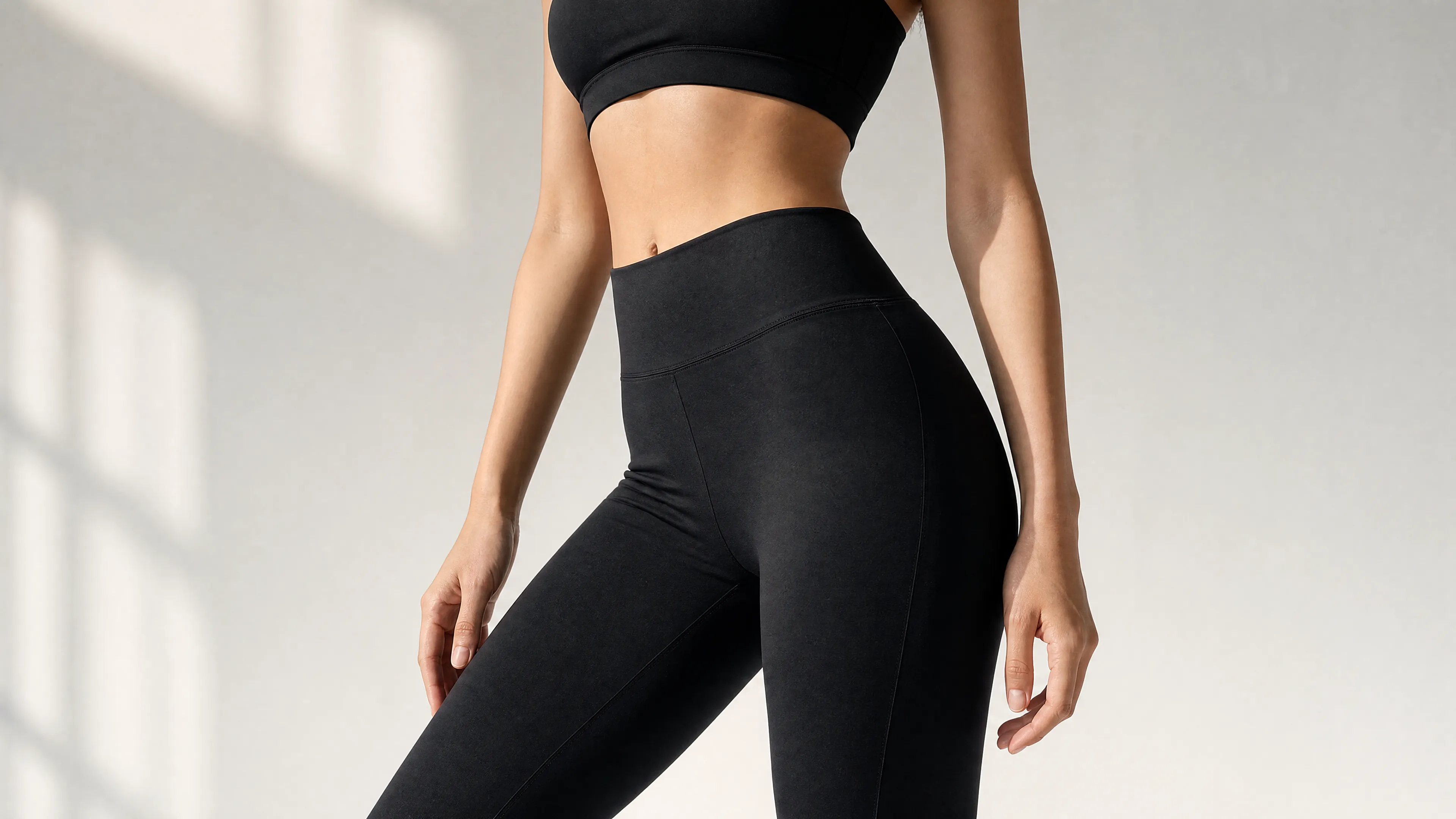
What Makes Leggings Squat-Proof? Fabric, Weight, and Construction
Opacity in deep bends depends on knit density and color — here's how to test and what to buy.

Nylon vs Polyester Activewear: Stretch, Sweat, and Durability
The most common premium activewear debate — settled with fiber facts.